Mycophobia
During lockdown, I started pouring liquid acrylic over old photographs. I wanted to do something with my hands. The paint spread, colours separated, little creatures appeared. I liked it so much that I made hundreds of these things, and only then started worrying about whether I was doing anything worthwhile.
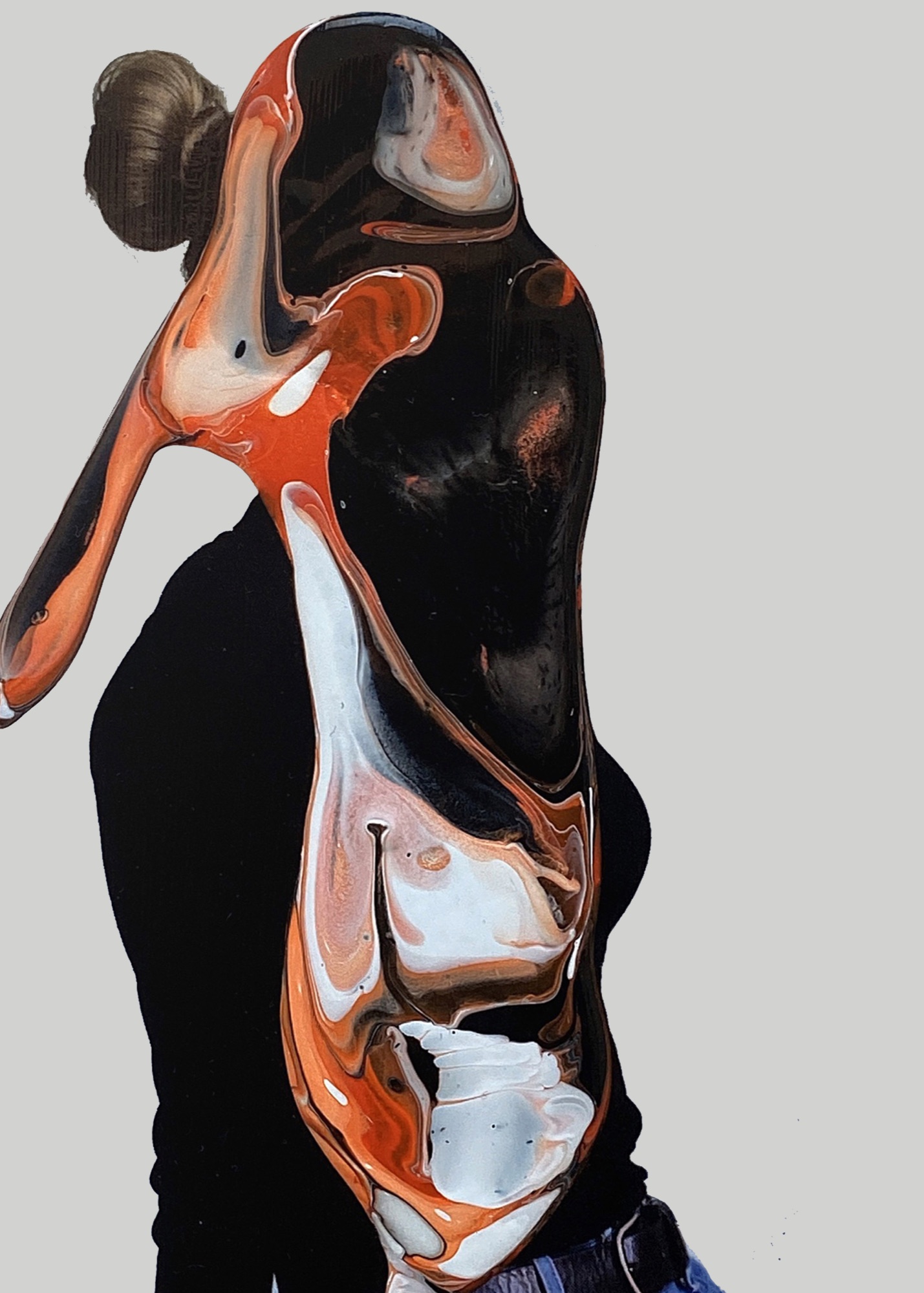
The portraits here were taken several years earlier, on a visit to Rostov-on-Don. I was living in Saint Petersburg then. I contacted a modelling agency, showed them my photographs and asked if I could photograph some of their models. They agreed. I wanted to make the women look beautiful, and spent time finding the right angle, pose and expression. Some of the pictures were used; others sat in my archive.
By 2020, I had moved to Britain and spent a period working as a model myself, including in the adult industry. I wanted to make art again. I had plenty of old photographs to work with, and pouring paint over them was something I could start doing straight away.
I mixed acrylic paint with pouring medium and water, changing the proportions and trying again. I would pour one cup, then another. There would be too much paint, so I would hold another photograph underneath to catch it. Everything kept flowing. You couldn’t just walk away: it would end up everywhere. Two or three hours could pass like that.
In an interview about my acrylic work in 2020, I called this organisational work. I was the top manager. I gave the paints the best possible conditions to grow, develop and succeed. I was quite serious about that, actually. I didn’t want to draw the shapes myself. I wanted to see what the paint would do.
Small, cheap prints made this much easier. On a bigger print I would start thinking about how much it cost and whether I was about to ruin it. That is a terrible thought to have while the paint is already running. With the small ones, I could keep going. A good photograph might be lost because the paint didn’t work on it. An ordinary one might become something I wanted to keep.
The ease of it bothered me. There were so many tutorials online; anyone could learn to make these pretty patterns. I had already made hundreds before I stopped and thought: what am I doing? Surely it couldn’t be this enjoyable and still count as serious art. Apparently I expected a bit more suffering.
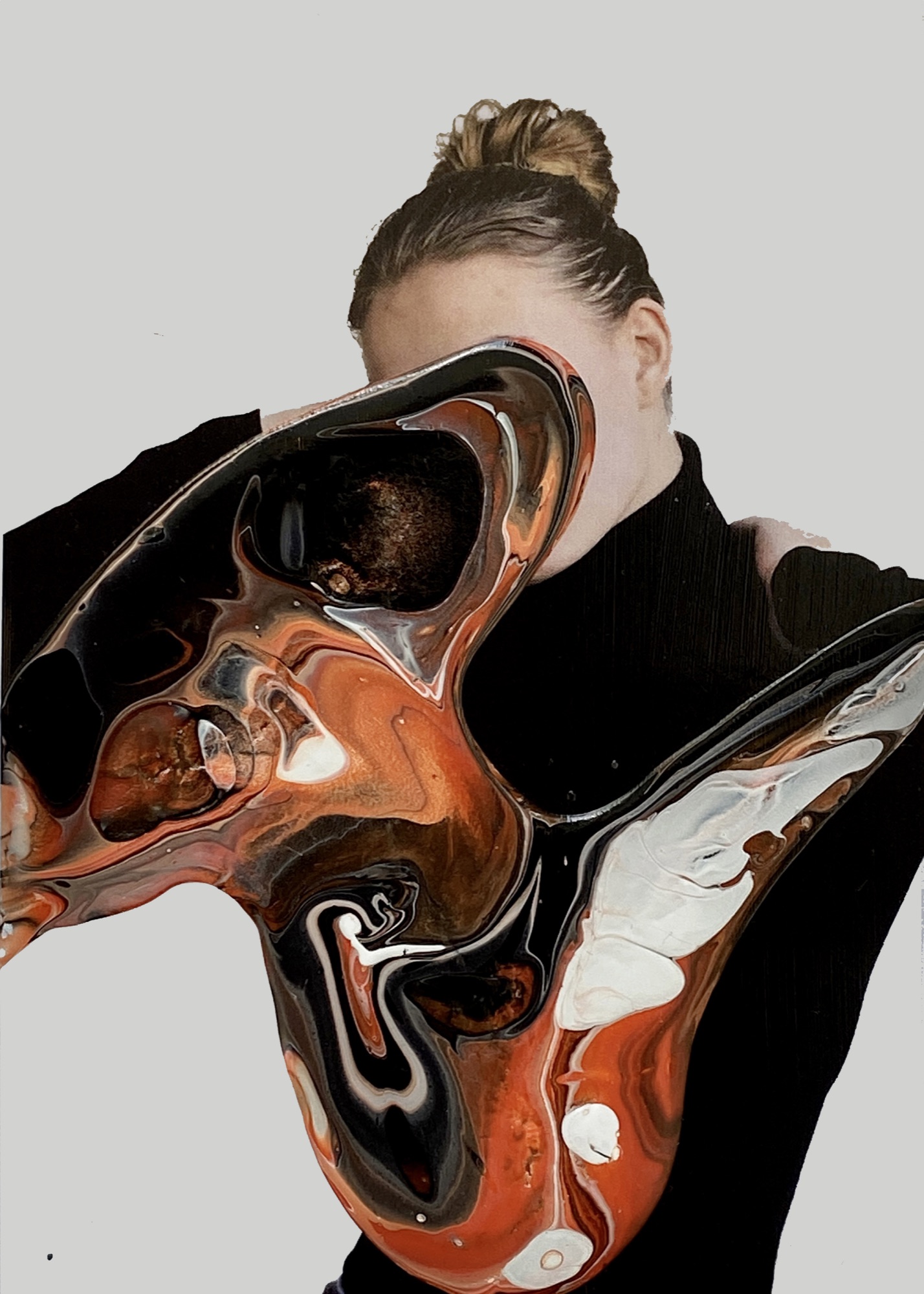
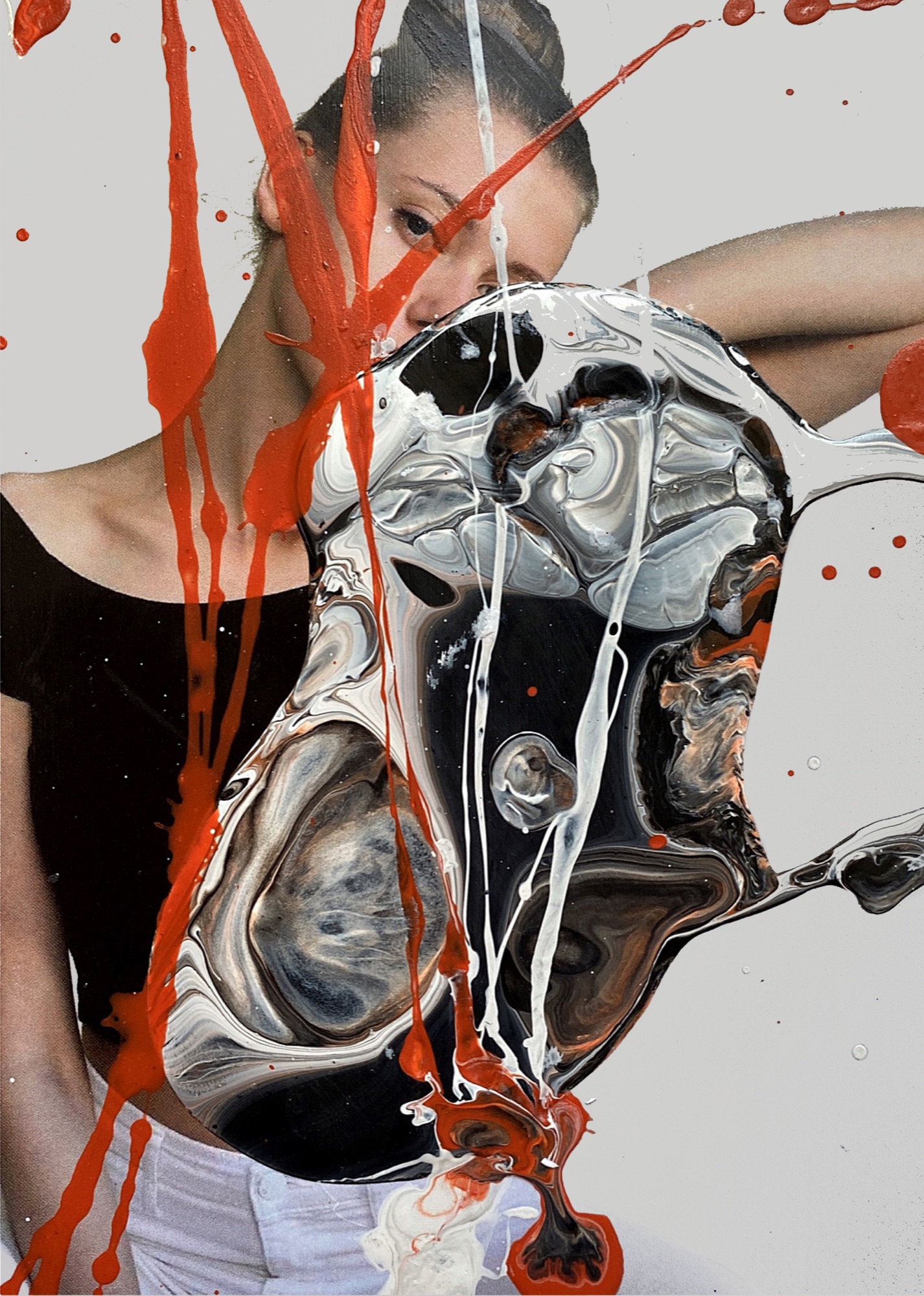
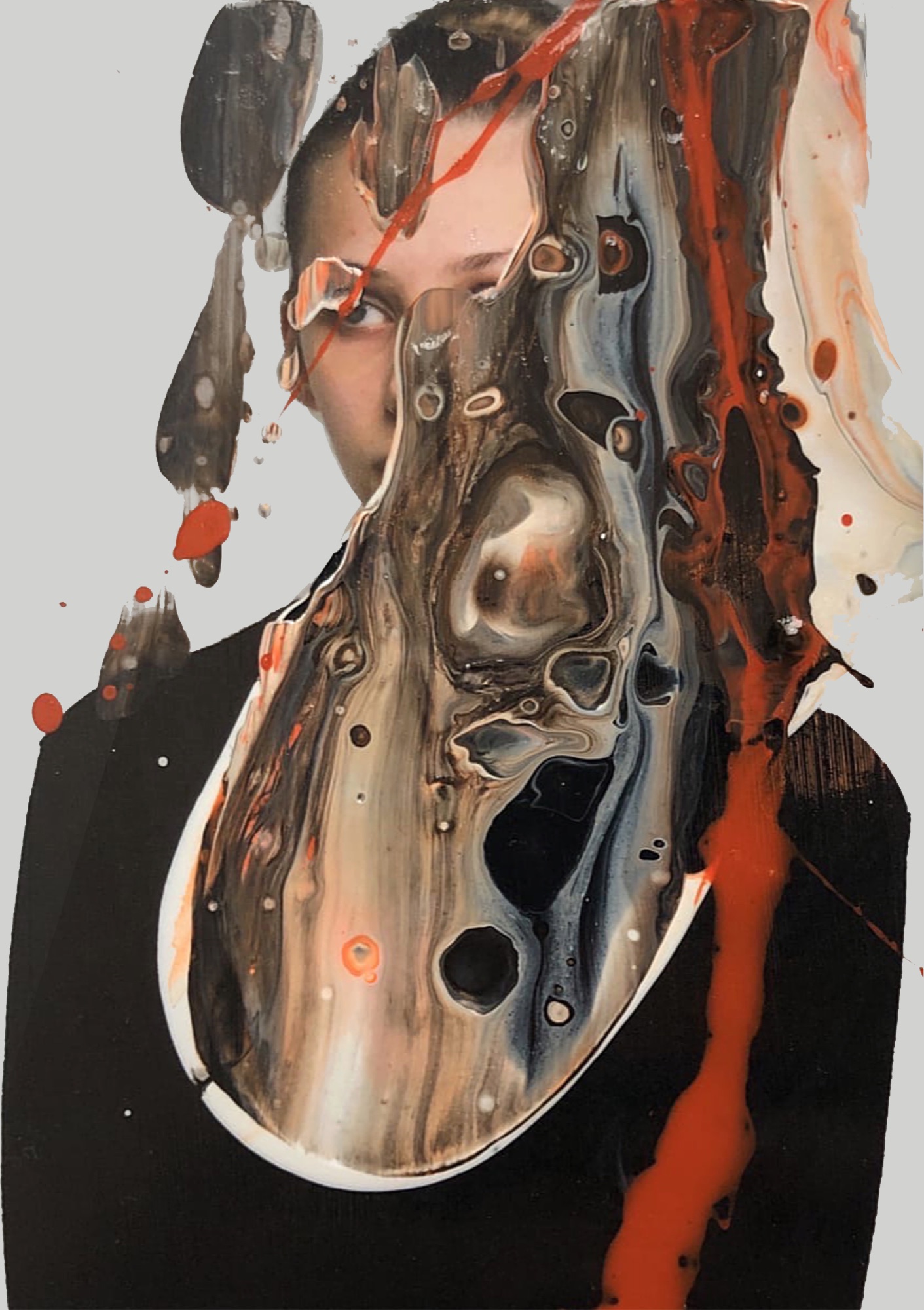
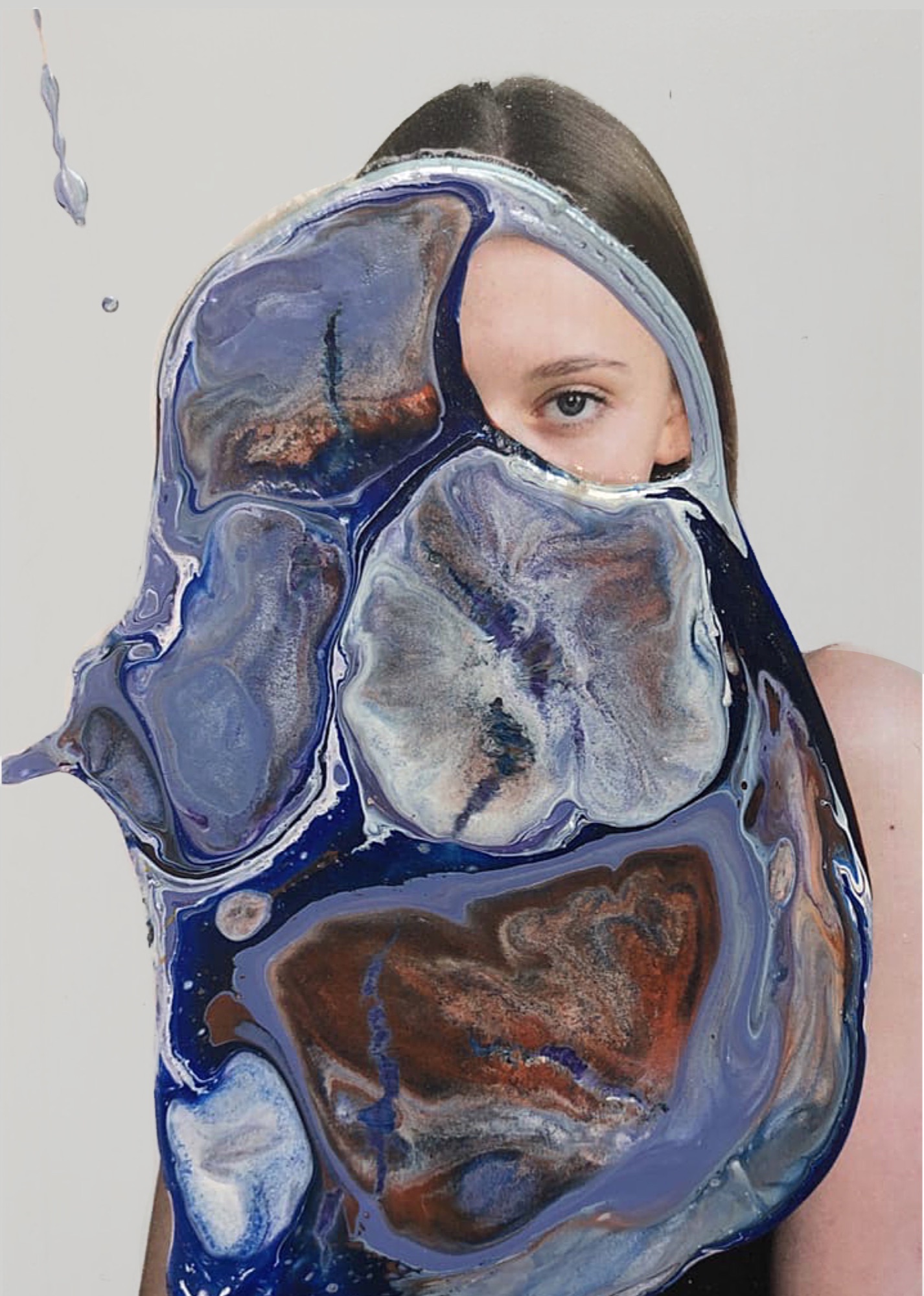
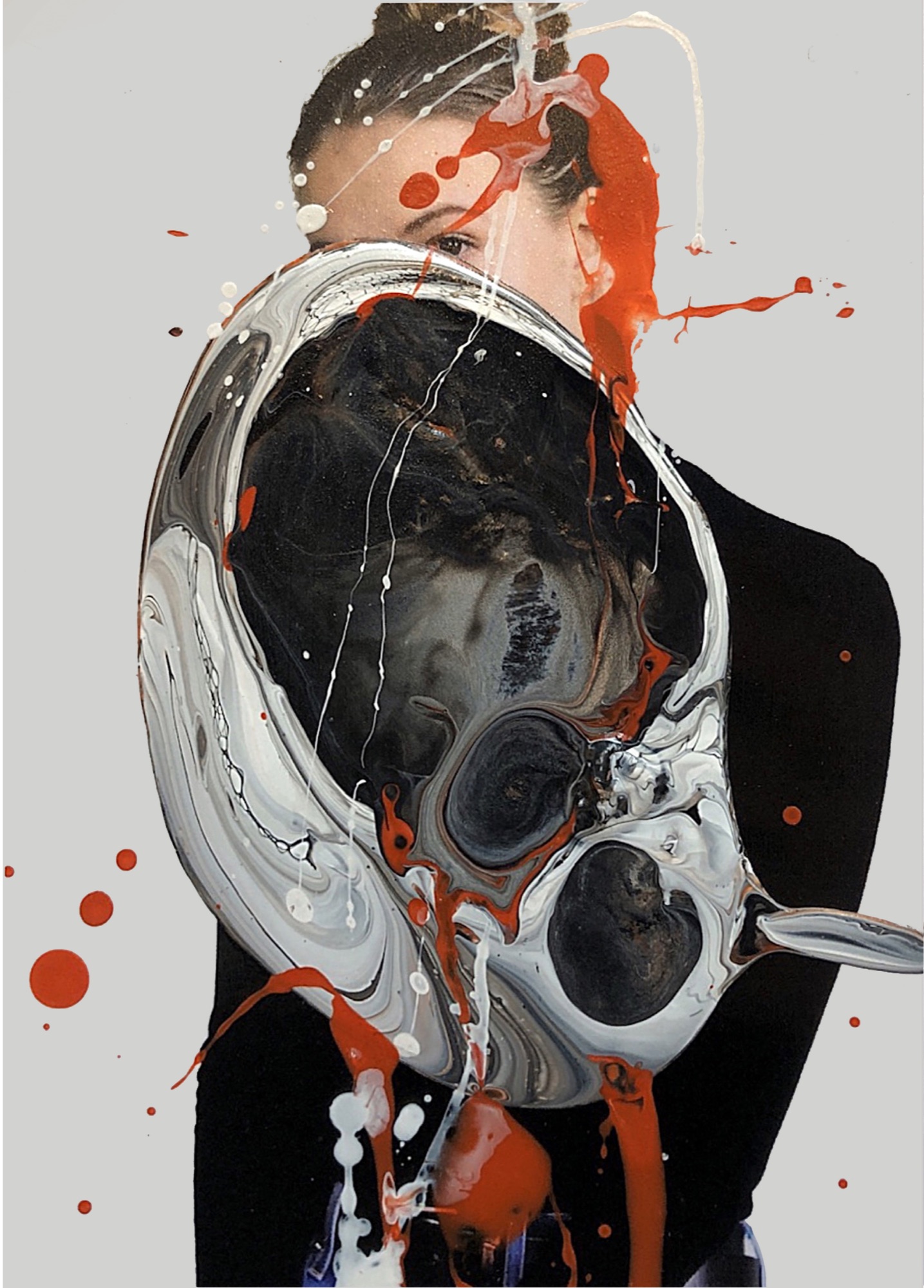
These six came out of that much larger pile. They weren’t my best photographs or my worst. They were the ones the paint landed on beautifully. I found faces and creatures in the shapes, including a little face like a Halloween skeleton. I loved it.
The mushrooms came later, in conversations with my friend Anastasia. I paid her to write a text about the works. She described the paint as mould and fungi taking over the portraits, and the portraits as “beautiful but dead”. In her account, the paint brought them back to life. It was 2020, and we were talking about growth and contamination while living through lockdown.
At the time, I thought that hiring people could help me understand what I was doing as an artist. I hired writers, critics and translators, and tried to give them everything they needed to explain my work. They wrote the texts. My doubts stayed. I still didn’t feel that my art connected me to the world.
It took another six years before I felt I could speak for myself. I’ve kept Anastasia’s text here because it belongs with these pictures.
Read Anastasia’s textCommissioned in 2020
Filthy, slithery, slippery. Rampant, feverish, famished. They are feeding on flesh remains. They are vigorously growing under the surface. They are obscenely exposing their private parts. Their spores are stealthily carried by the wind, unseen and unheard. Mushrooms, mildew and mould are omnipresent and omnipotent. There is nothing they cannot desecrate. Their bodies are devouring this thing that we call culture.
The project «Mycophobia» by Marina Smith is a little bit of a phantasm, a little bit of a mimesis. The photographic paper of a small format contains laconic female portraits. These girls are models with impeccable appearance. They are radiating juvenility and purity. Their facial expressions have almost nothing to say. Marina took these photographs several years ago. These portraits are beautiful but dead. Marina decided to bring them back to life.
She is blending paints in a glass; she is pouring them onto the glossy surface. Acryl clots are spreading on the photographic paper. They are shimmering disturbingly and throbbing with a viscous texture. Marina is washing out the colours and their outlines. The layers are flourishing with lead and quicksilver, gaping in cobalt and copper, bleeding with crimson and oozing black. Some of them are breaking down into sickening pink, intoxicating indigo, and suffocating whitish.
A new life is being born in these odd patterns. The girls are still there, in the photos. But they have been taken over by a fungus-like mass. Pondering over the Buddha’s death, John Cage wrote: «The function of mushrooms is to rid the world of old rubbish. The Buddha died a natural death». Fungus-like acryl stains are cleansing Marina’s archive photos of gloss, inanity, and emptiness. Artificial mould is revealing the mechanics of time. Marina is outrunning the decay by taking on the work of fungi.
The putrefaction temporarily steps aside, standing still in front of a fake. Death is renewed with life, order takes the place of chaos, and civilisation is absorbed by nature. Everything carries on as usual. Life, which is changeable, unpredictable, irrepressible, repellent, eerie, and hideous, triumphs. Acryl fungi are a part of this life. They sprang from the same impulse that the real ones emerge from. Mycophobia is a descent into life.