Art of the Explicit
This essay maps an artistic field that I encountered after my own methods had already taken shape. The artists discussed here did not influence the formation of my practice. I found their work retrospectively and recognised points of contact: explicit images treated as unstable material, bodies altered by mediation, and acts of looking complicated by blur, fragmentation, performance or concealment.
The comparison therefore concerns operations rather than origins. These practices come from different periods, media and positions. Some begin with painting, others with photography, online encounters, found images or dolls. Placing them together does not produce a single lineage. It shows how often explicit imagery becomes a site where desire, technique, power and interpretation interfere with one another.
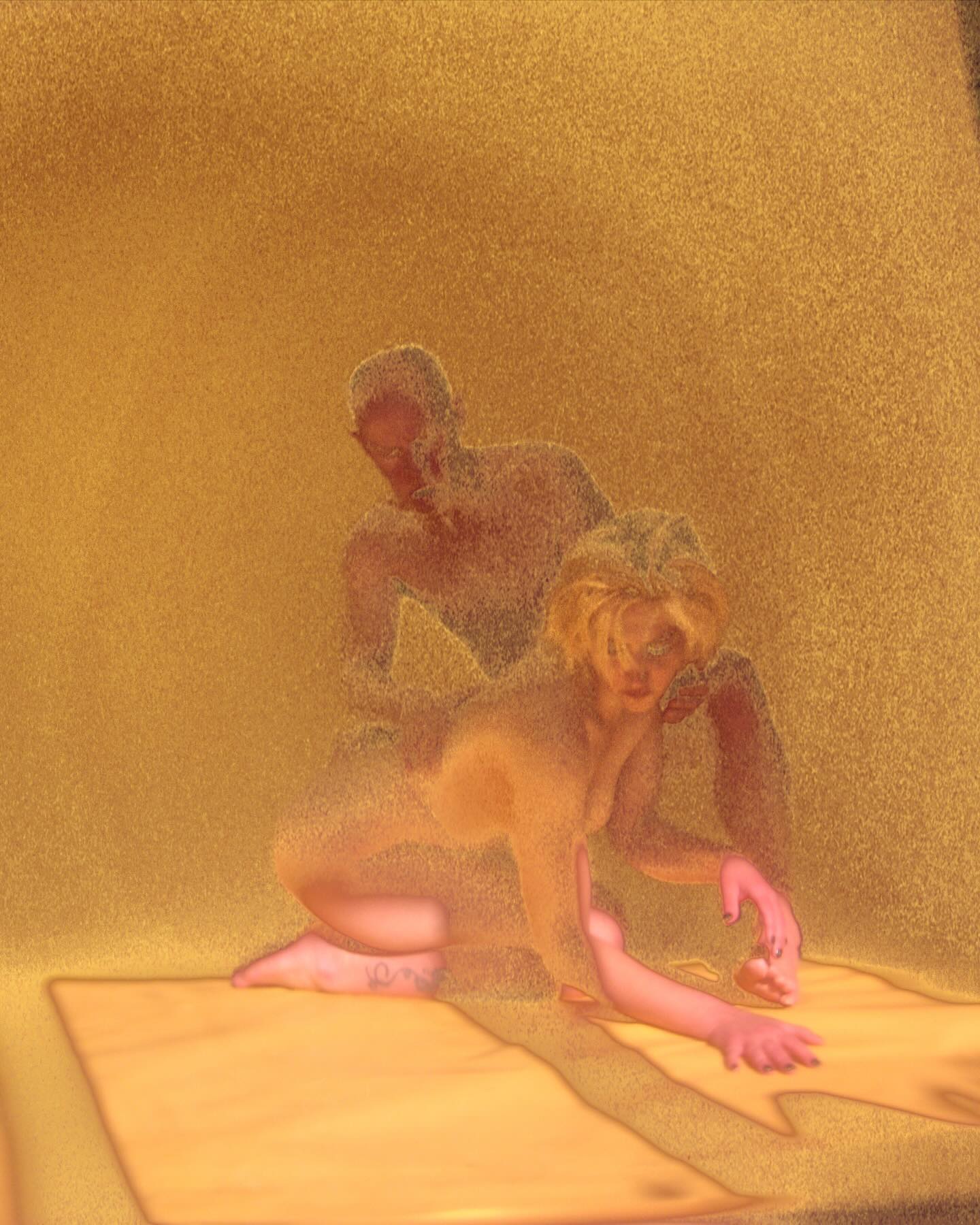
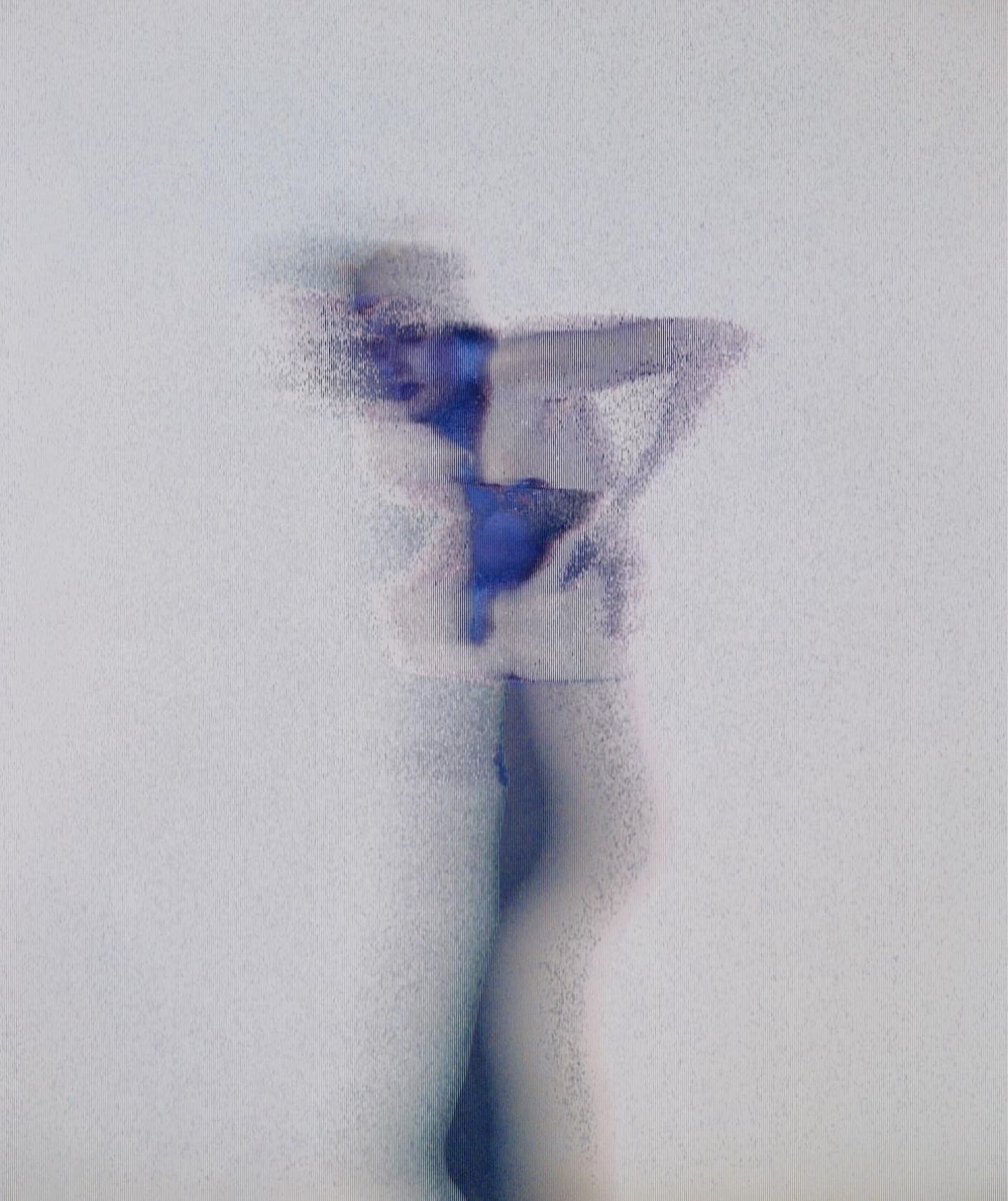
I am writing from within this field, rather than attempting to survey it from a distance. My own work begins with explicit photographic material. Through blur, layering, colour shifts, low resolution and digital interference, recognisable sexual information becomes partial and unstable. The act remains present, but its meaning can no longer be read as a simple document.
What an explicit image is expected to do
Pornographic images are often treated as unusually direct. They appear to show exactly what happened and to organise the viewer’s response in advance. Linda Williams describes this demand for visible proof through the phrase “frenzy of the visible”: pornography attempts to make pleasure legible, bodily and verifiable. Yet an explicit image never arrives without a structure around it. Production, performance, circulation, payment, consent, fantasy and the viewer’s position all affect what can be seen.
The political arguments around pornography make this instability especially charged. Andrea Dworkin understood pornography primarily as an organised form of male possession and power. Williams approached it as a genre with a history and a visual language, moving beyond the opposition between prohibition and celebration. Jennifer Doyle later argued that describing an artwork as “about sex” reveals very little by itself. Sexual content does not settle the meaning of an image. It often begins the argument around it.
This is where my interest lies. Alteration does not make explicit material innocent or respectable. Blur can withhold information while intensifying attention. Colour can make an image seductive and artificial at the same time. Damage can interrupt the certainty promised by the source without removing its erotic force. The image becomes a negotiation between what is shown, what is withheld and what the viewer supplies.
From information to ambiguity
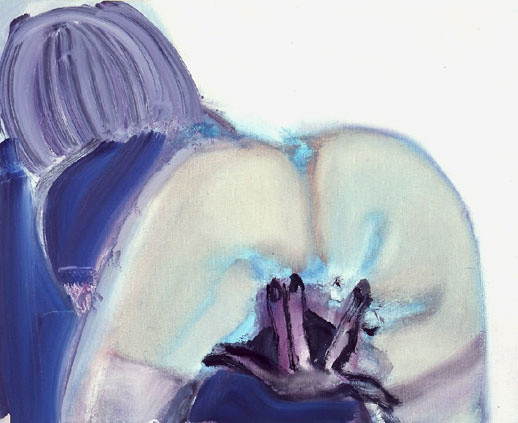
Marlene Dumas and Thomas Ruff begin with pornographic source images but move them through different material systems. In Fingers (1999), Dumas crops and repaints a photographic source until the explicit act becomes a field of gesture, touch and colour. The painting retains the pose while loosening its original narrative. Dumas has described the source photograph as far more explicit than the finished painting. What remains is suggestion and an uncertainty between lust, affection and performance.
Ruff’s nudes series, begun in 1999, stays within photography while exposing the technical conditions of early internet pornography. He selected small, compressed images from online thumbnail galleries, then enlarged, blurred and recoloured them. In nudes pea10 (1999), the source remains readable, but its low resolution and motion blur become the governing structure of the picture. Pornography is displaced from the rapid circulation of the screen into a large photographic print.
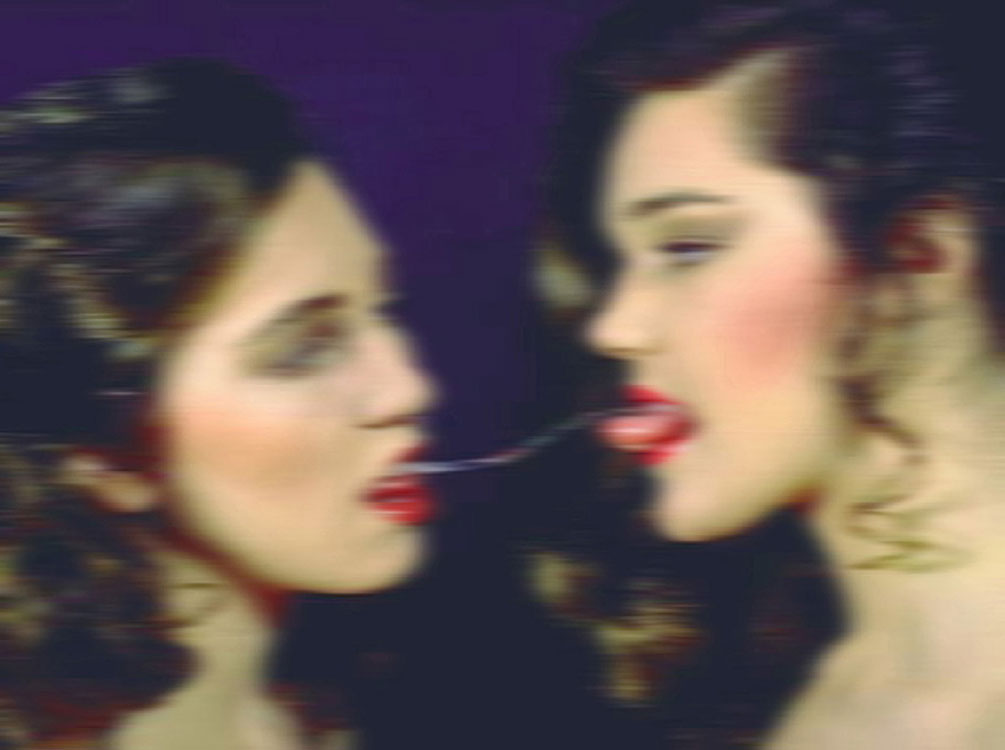
The comparison clarifies an important distinction. Dumas moves from photography into painting. Ruff enlarges the deficiencies of a circulated digital file. My work uses photographic alteration to keep the explicit act close while destabilising its legibility. Hito Steyerl’s account of the “poor image” is useful here because she treats compression, copying and deterioration as evidence of an image’s movement through technological and social systems. Low resolution is not simply a lack of quality. It records circulation and changes the conditions under which an image can be read.
Encounter, participation and power
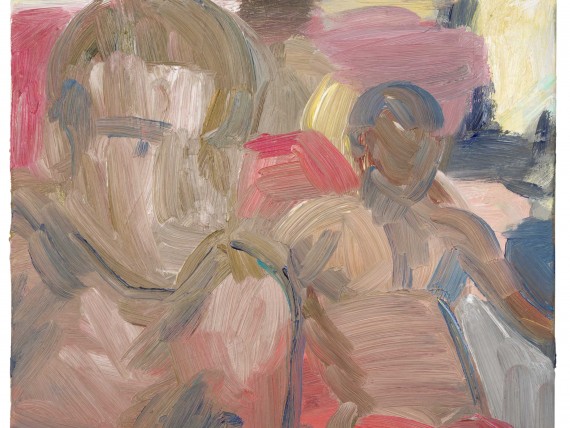
Celia Hempton’s Chat Random paintings shift attention from the found file to the live encounter. Hempton entered internet chat rooms, asked people she met to model, and painted for as long as each participant remained on screen. Aldo and Jesi, Albania, 16th August 2014 was produced inside that unstable duration. The webcam connects painter and model while keeping them physically separate. Looking becomes reciprocal, negotiated and time-limited.
Nobuyoshi Araki’s Tokyo Lucky Hole occupies a different social and ethical position. Made in Tokyo’s Shinjuku district between 1983 and 1985, the photographs document commercial sexual venues, their workers, clients, performances and architectures. The series cannot be reduced to an erotic style. It is also a record of access: who is permitted to enter, who performs, who pays, who photographs and who controls the public afterlife of the scene.

Hempton makes the model’s continued presence a practical limit on the work. Araki’s camera moves within a professional sexual economy whose relationships are less transparent to a later viewer. Placing these practices together keeps participation and power visible. It also prevents “intimacy” from becoming a neutral word. An explicit image may record an encounter, but it does not automatically explain the terms under which that encounter occurred.
Constructing a body
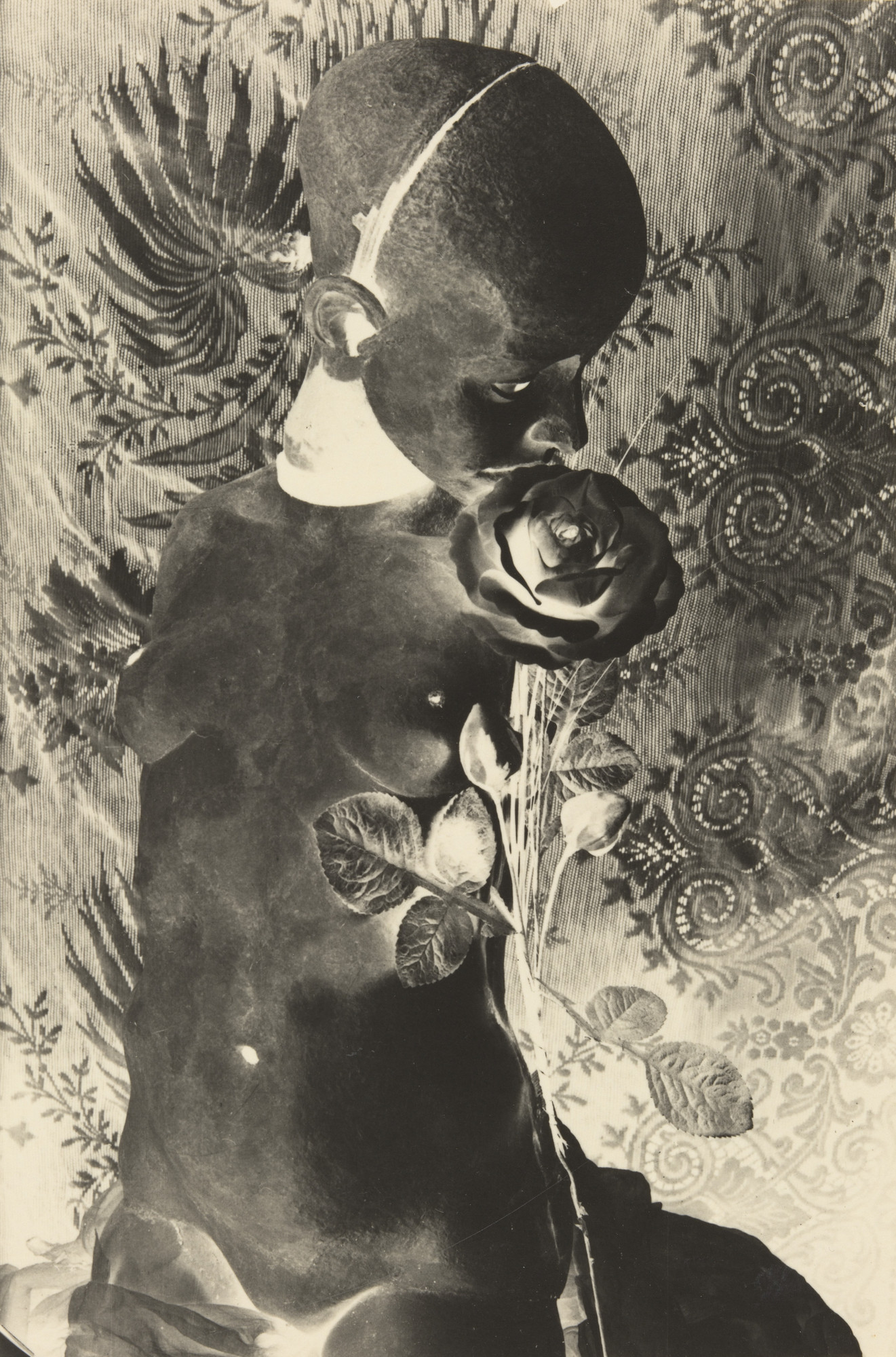
Bellmer’s photographs of La Poupée construct the body through an object rather than self-performance. The doll could be dismantled and recombined into anatomically impossible configurations. The photographs connect desire to repetition, substitution and control, while their violence cannot be separated from the fact that the represented body is coded as a girl. The work belongs to this field because it makes looking, possession and rearrangement inseparable. Its historical importance does not resolve its disturbing terms.
Withholding the view
Eva Stenram’s Drape series begins with anonymous vintage pin-up negatives. After scanning them, she digitally extends curtains and drapes so that parts of the women disappear behind the original background. In Drape XIV (2015), the room seems to move in front of the model. What was designed to frame the erotic display becomes the device that interrupts it.
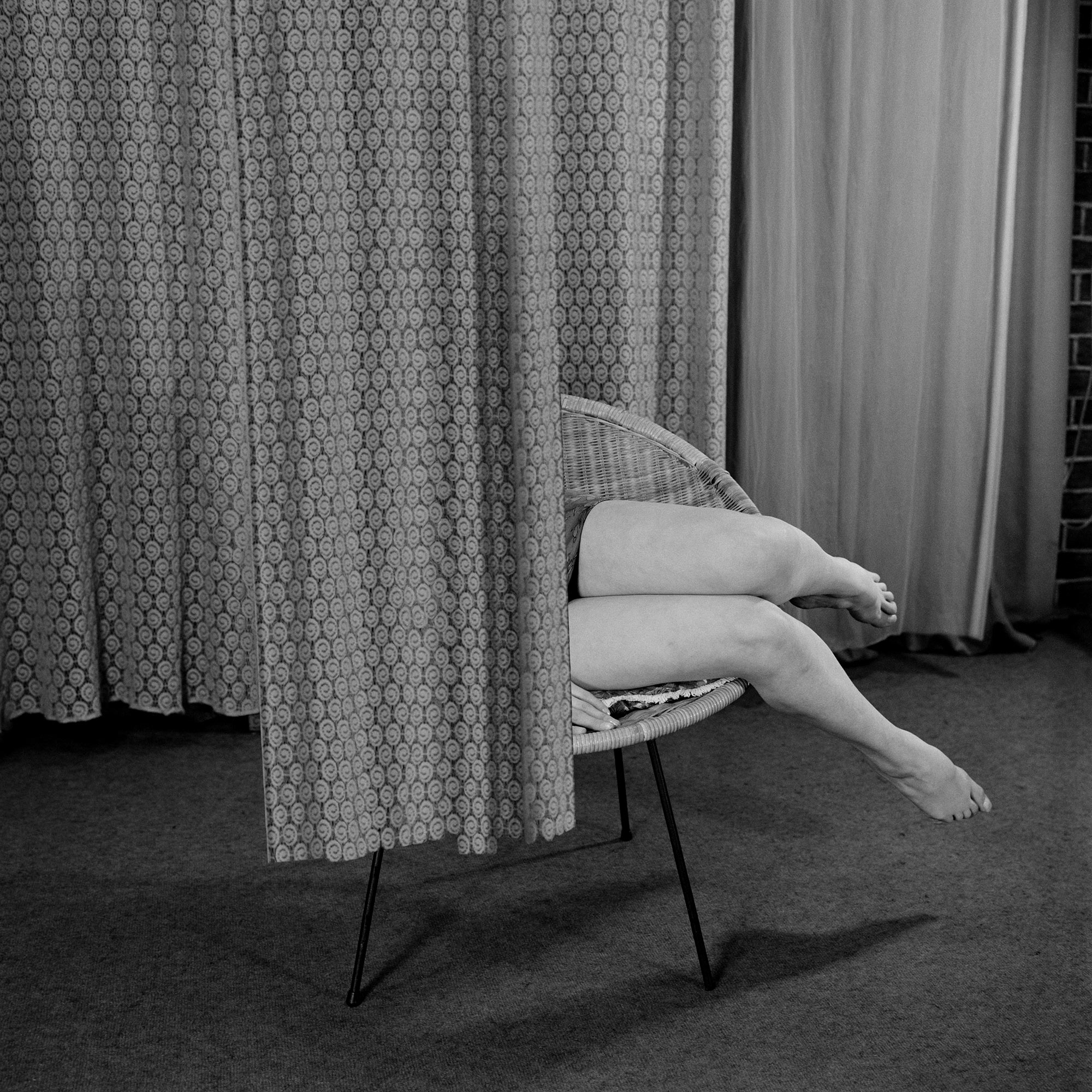
The concealment does not cancel voyeurism. It makes the act of looking more conspicuous. The viewer searches the boundary between body and curtain and becomes aware of wanting the missing information. This is close to the operation of blur in my work, although the visual means differ. Stenram inserts an obstacle into the scene. I alter the photographic information itself. In both cases, partial visibility generates attention rather than ending it.
Position, not lineage
These artists became relevant to me because their work gave me a way to compare decisions that had already emerged in my practice. Dumas clarified the movement from explicit source to ambiguity. Ruff made technical degradation visible as a photographic structure. Hempton located sexual representation inside a live mediated encounter. Araki made access, labour and authorship impossible to ignore. Bellmer made the construction and fragmentation of an erotic body inseparable from possession and control. Stenram demonstrated how concealment can reorganise the viewer’s desire.
The differences prevent this group from becoming a genealogy. I do not share a medium, historical programme or politics with all of these artists. Their work offers points of proximity and resistance. Those points help me state what my own images do: they retain the sexual act, interfere with its readability, and leave attraction, shame, control, fantasy and refusal active within the same frame.
Publishing this research alongside the work is part of its public context. The text makes visible how I understand the field in which the images operate and where my approach converges with or departs from other practices. It also resists the idea that an explicit image has already explained itself simply by showing sex.
Works discussed
- Araki, Nobuyoshi. Tokyo Lucky Hole. Photographs made in Tokyo, 1983–1985.
- Bellmer, Hans. Plate from La Poupée. 1936. Gelatin silver print.
- Dumas, Marlene. Fingers. 1999. Oil on canvas.
- Hempton, Celia. Aldo and Jesi, Albania, 16th August 2014. 2014. Oil on canvas. From the Chat Random series.
- Ruff, Thomas. nudes pea10. 1999. C-print.
- Stenram, Eva. Drape XIV. 2015. Silver gelatin print on fibre-based paper.
Selected bibliography
- Barthes, Roland. Camera Lucida: Reflections on Photography. Translated by Richard Howard. New York: Hill and Wang, 1981.
- Doyle, Jennifer. Sex Objects: Art and the Dialectics of Desire. Minneapolis: University of Minnesota Press, 2006.
- Dworkin, Andrea. Pornography: Men Possessing Women. New York: G. P. Putnam’s Sons, 1981.
- Foster, Hal. Compulsive Beauty. Cambridge, MA: MIT Press, 1993.
- Foucault, Michel. The History of Sexuality, Volume 1: An Introduction. Translated by Robert Hurley. New York: Pantheon Books, 1978. Originally published in French in 1976.
- Freud, Sigmund. Three Essays on the Theory of Sexuality. 1905.
- Freud, Sigmund. “Fetishism.” 1927. In The Standard Edition of the Complete Psychological Works of Sigmund Freud, vol. 21, translated and edited by James Strachey, 152–157. London: Hogarth Press, 1961.
- Lacan, Jacques. The Four Fundamental Concepts of Psychoanalysis. Edited by Jacques-Alain Miller. Translated by Alan Sheridan. New York: W. W. Norton, 1977.
- Mulvey, Laura. “Visual Pleasure and Narrative Cinema.” Screen 16, no. 3 (Autumn 1975): 6–18. doi:10.1093/screen/16.3.6.
- Steyerl, Hito. “In Defense of the Poor Image.” e-flux journal, no. 10 (November 2009). e-flux.
- Williams, Linda. Hard Core: Power, Pleasure, and the “Frenzy of the Visible”. Berkeley: University of California Press, 1989.